

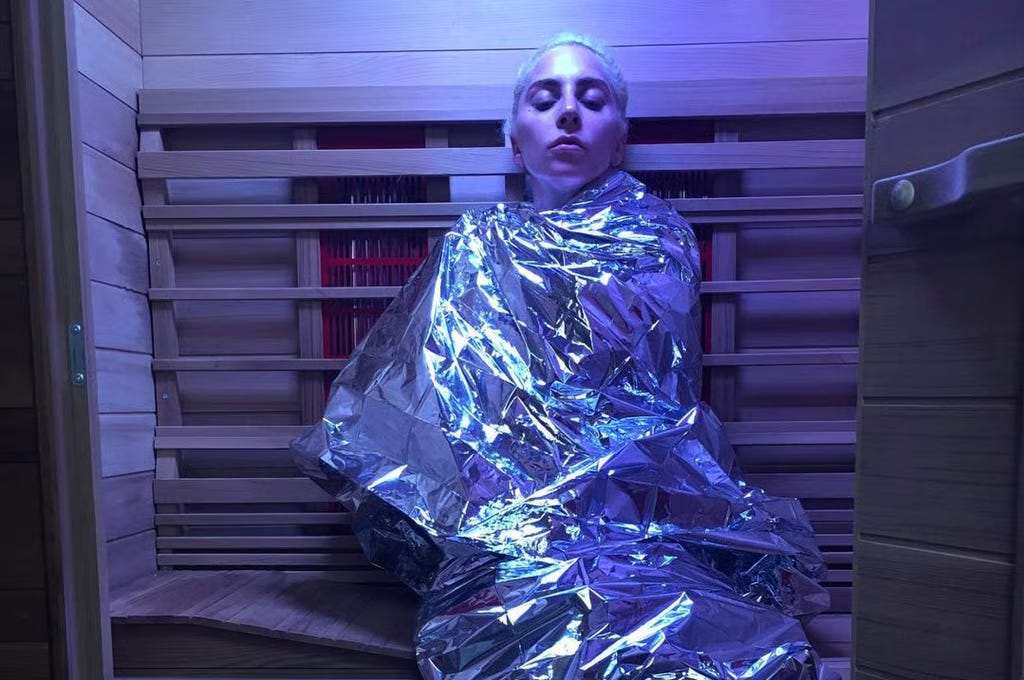
Wellness TikTok and Instagram are awash with celebrities and influencers donning infrared masks and gadgets that give them a red glow. And as an alternative to traditional sauna, infrared cabins are gaining popularity for providing therapeutic benefits for a lower running cost — the US market size is expected to reach $379 million by 2030, up 5.42% from 2025. We asked journalist and Wild Sauna author Emma O’Kelly to delve into the science behind infrared and answer what she calls The Eternal Sauna Question: Which type of heat therapy is better? Turns out the answer is not as straightforward as we thought.
Text by Emma O’Kelly
If ever there was a topic designed to get sweat bathers hot under the collar, it’s that of traditional sauna versus infrared. The traditionalists, armed with ladles full of culture, ancestral wisdom, ritual and steam enjoy a practice that is good for body, mind and soul; the infrared brigade champion an affordable, accessible wellness tool that delivers specific health benefits. Both have their place in the wellness world and yield similar results. Yet the animosity between the two is like the Montagues and the Capulets. Why?
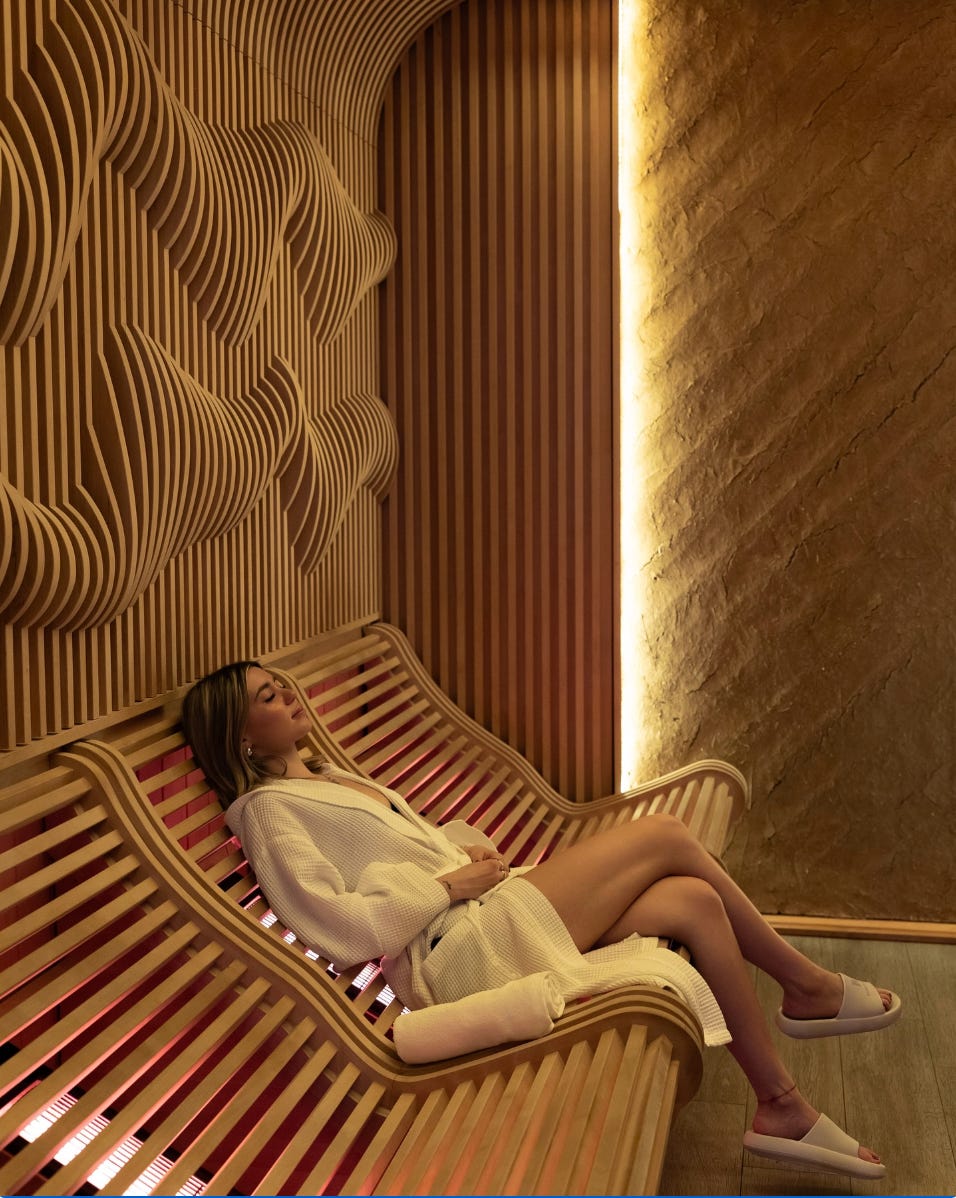
Partly it’s down to semantics. At some point, the word ‘sauna’ attached itself to the word ‘infrared’ without asking permission. This infuriates a certain cohort who pride themselves on the fact that sauna is a Finnish word used the world over to describe a Finnish practice. As Risto Elomaa, president of the International Sauna Association, points out: “In sauna, there has to be a stove with stones that are heated and in turn warm the air. An infrared cabin is not a sauna because there is no stove.” So, to avoid confusion and put the traditionalists at ease, we are going to use infrared therapy (IR) without any notion of sauna, and use sauna to mean traditional sauna only.
“In sauna, there has to be a stove with stones that are heated and in turn warm the air. An infrared cabin is not a sauna because there is no stove.”
Risto Elomaa, International Sauna Association
The science of infrared
So, what, then, is infrared and how is it used? It’s a wavelength of light invisible to the human eye, that straddles light and heat and sits next to red on the colour spectrum. It comes in different wavelengths; far infrared is the longest, most deeply penetrating wavelength, and is typically used therapeutically at 40-45°C. Only the body, not the surrounding air, is warmed gently. Health benefits include muscle recovery, improved circulation and cardiovascular function. And IR can target specific aches, pains and injuries and certain skin conditions
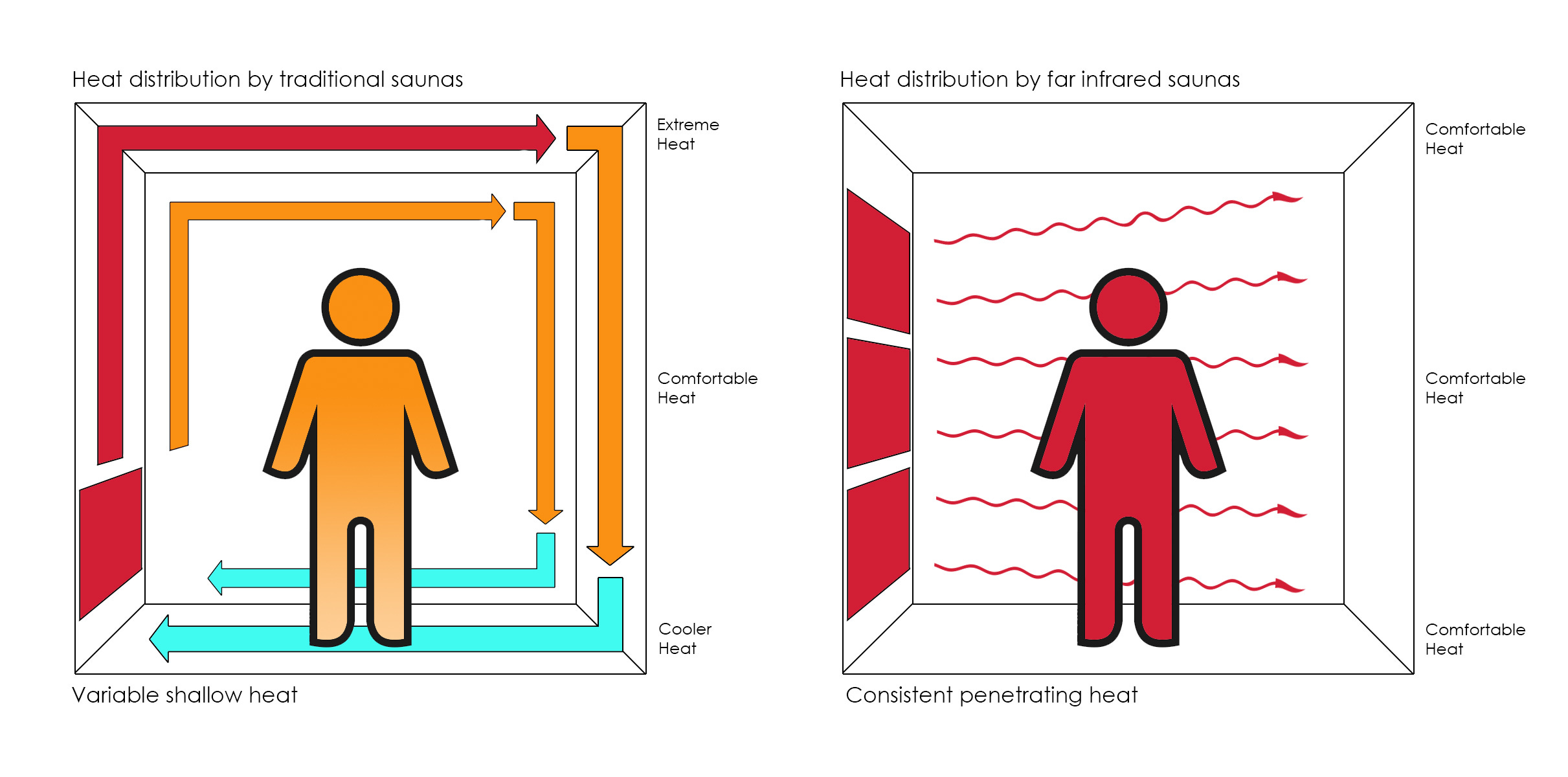
Confusingly, near infrared is used in red light therapy (also known as photo biomodulation), which stimulates mitochondrial function of cells and can increase collagen production, repair skin, heal wounds, aid recovery from injury and reduce inflammation. Although it uses a type of infrared, red light therapy is another discipline altogether and has nothing to do with heat therapy.
“The recent popularity of infrared (of all wavelengths) is largely down to the biohacking movement and the rise in wearables,” says Sarah Turner, British neuroscientist and founder of Cerathrive. Her Cera headbands, body panels and body straps use near infrared and are said to aid brain and gut health and heal gynaecological wounds.
Ways to get an infrared blast
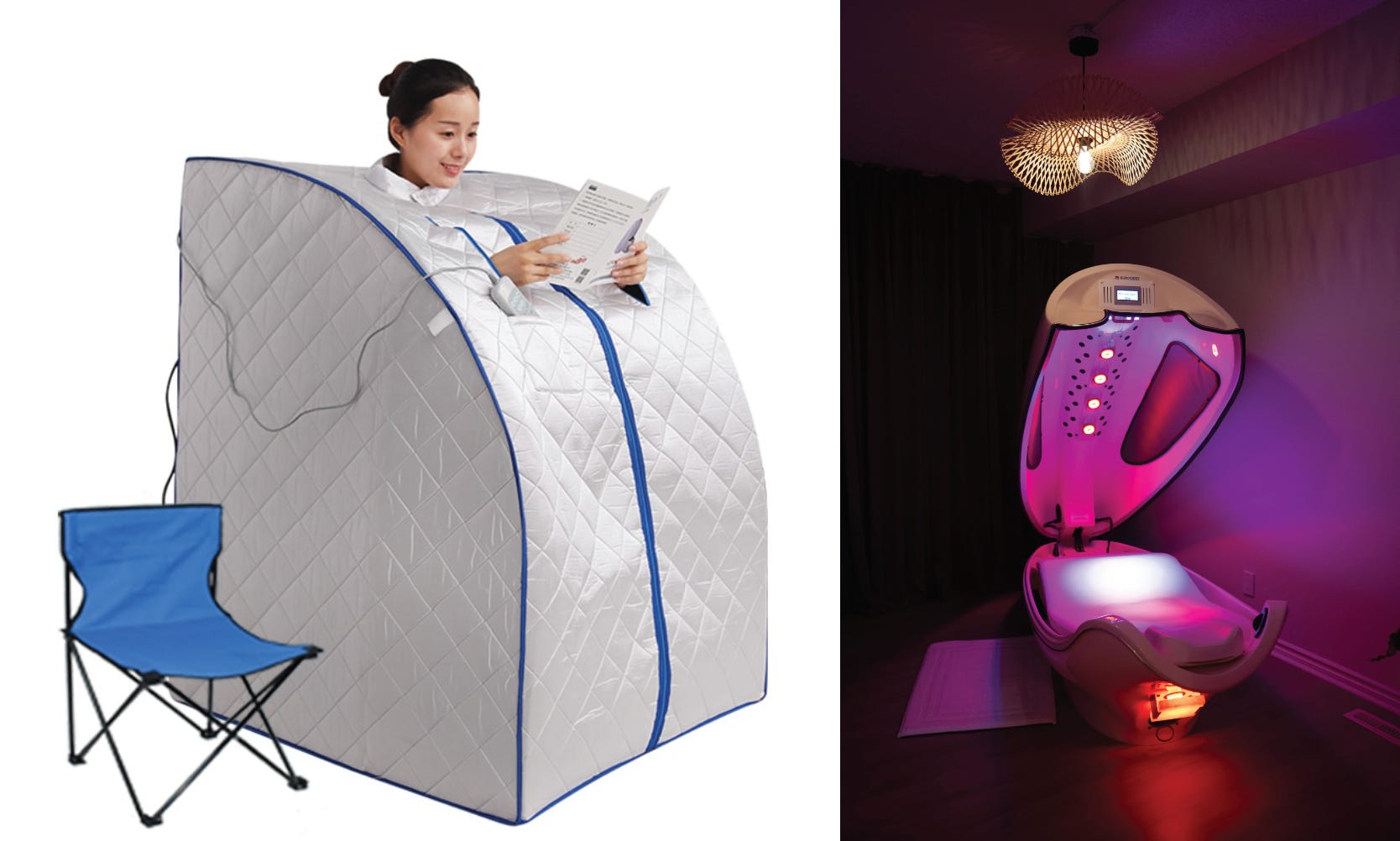
“Infrared devices are for the everyman,” says Raleigh Duncan, CEO of Clearlight Saunas which has championed infrared for more than 30 years. An infrared cabin can be installed at home in an hour; it’s cheaper to heat up than a sauna, and it can be easily dissembled and moved.
Portable, affordable infrared gadgets mean it’s easier than ever to get a blast of nourishing heat and light. IR blankets, IR tents and IR domes are increasingly popular – five-star guests at London’s Mandarin Oriental Hotel can hire a Bon Charge IR dome to their room instead of going to the spa. Red-light pads, face masks and Bon Charge toothbrushes, KLAFS ceramic heat loungers and infrared seatbacks and Clearlight red light towers provide portable options that deliver infrared heat and/or light exactly where you need it.
“The combination of demonising the sun and over-exposure to high concentrations of blue light through screens and gadgets means we don’t experience as much infrared (through natural light) as our ancestors.”
Sarah Turner, Cerathrive
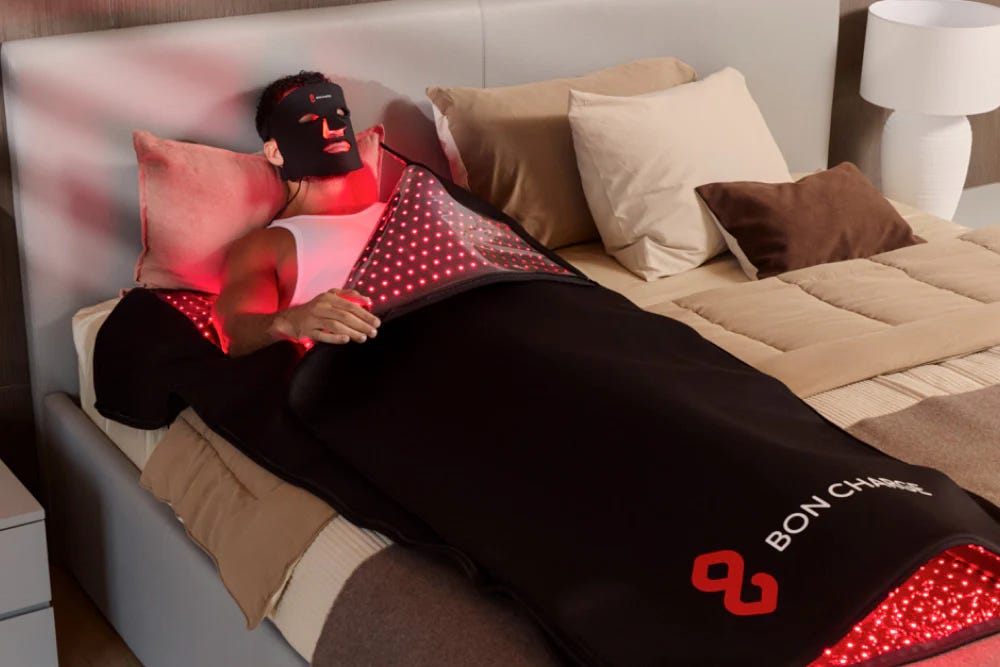
Add to such practical applications, the narrative of too much blue light exposure and its negative impact on circadian rhythms, and the case for near infrared is strong. “The combination of demonising the sun and over-exposure to high concentrations of blue light through screens and gadgets means we don’t experience as much infrared (through natural light) as our ancestors,” says Turner who wakes each day for sunrise.
What the studies say
To date, there have been around 4,000 peer-reviewed studies into near and far infrared, but proof of health benefits of both is still largely anecdotal. In 1989, a seminal study by a Japanese doctor into the positive effects of dry sauna at 60°C on cardiovascular patients that led to the term Waon Therapy (waon meaning “soothing warmth” in Japanese). Extensive studies by Finnish cardiologist Jari Laukkanen have sparked renewed interest in traditional sauna and in heat therapy more generally, but more studies are needed.
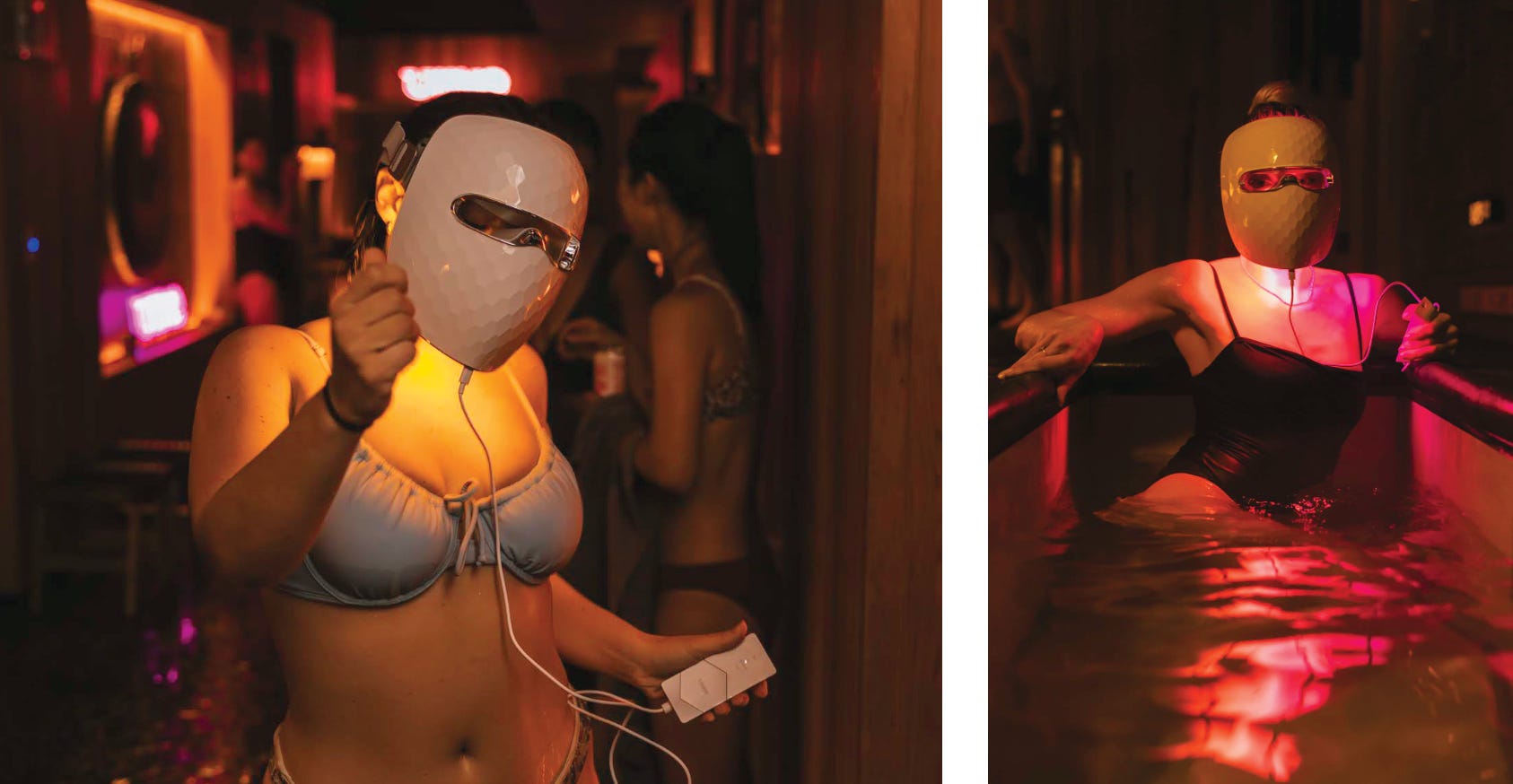
In October, more than 100 people tuned in to a webinar entitled The Sauna Conundrum: Tradition vs. Infrared - which delivers the real sauna experience? It was moderated by Don Genders, CEO of Design for Leisure which makes ‘hybrid’ saunas featuring regular stoves and infrared panels. Genders and a panel of experts agreed that both practices have their place; it really comes down to personal preference. Mant doesn’t like getting his head too hot and always opts for a IR blanket; For Elomaa, “red lights mean the back streets of Amsterdam.”
At the webinar, The Eternal Sauna Question was asked, as it always is: “So, which one is better?” “Neither,” responded Genders diplomatically. “Just listen to your body and work out which one you like best.”
Emma O’Kelly is a London-based journalist and author of Wild Sauna: The Best Outdoor Saunas in Britain and Sauna - The Power of Deep Heat
Infrared products to try
Bon Charge infrared PEMF sauna dome — surprisingly effective. At the launch of the collaboration with Mandarin Oriental (above), I enjoyed a 20-minute session and happily nodded off to sleep.
Bon Charge infrared sauna blanket — a more portable way to feel the benefits of infrared.
Clearlight infrared cabins — for 1-5 people at home indoors. UK spa Pennyhill Park has just installed one in its Acacia suite.
KLAFS InfraPLUS backrest and seat — can be stand-alone or slotted into a traditional sauna providing a “best of both worlds” option.
By Emma O’Kelly
Happenings
The Great Northern Winter Festival
Step into the warmth of The Great Northern Sauna Village, presented by Superior Saunas, with more than twenty distinctive mobile saunas: a living showcase of design, craftsmanship, and community.
January 28 - February 1, 2026 Tickets here
News

Three major articles in just six days! A surefire sign that bathing is hitting the big time. In the New York Times article —The Europeans Have Some Notes About American Sauna Culture — Therme Group’s Robert Hammond stood up for the US scene. His quote: “Even if Americans are doing it wrong right now, it’s still healthier than not, right? We just need more help doing nothing than the Europeans.”
While in a Bloomberg piece on sauna’s popularity, Hammond was quoted on the bathhouse: “It’s a sexy place. It’s no coincidence that the busiest times in a bathhouse in New York are when happy hour used to be.” Referencing the scale of current bathhouse investment, the article mentioned: “Therme Group, which develops massive facilities that can hold hundreds of people at once, recently raised €1 billion ($1.2 billion) to expand across Europe and is developing locations in Washington, DC, and Dallas.”
Finally, we enjoyed Marisa Meltzer’s Vanity Fair article on New York bathhouse rivalry with lots of great insight from the bathing community. “Welcome to the sauna wars,” she writes, remarking that in Flatiron and Williamsburg, multiple bathhouses are opening up just blocks away from each other.
One Last Thing
Wallpaper*’s “life-enhancer of the year” is of course, a Finnish sauna. Congrats Jaakko Torvinen on Puusauna, a space that puts steam-lovers among the trees.
We’d love to hear from you - please send a DM, or email hello@cultureofbathing.com
The people at Culture of Bathing are doing a fabulous job with this Substack. Thank you!!
Good article Emma.
There is a lot of misleading advertising and selling with IR and sauna that make it difficult to know what's true. I'd be interested in any accurate info anyone has.
One article on IR: https://medium.com/@trumpkin/ir-beneficial-or-snake-oil-7a5374fd7baa