

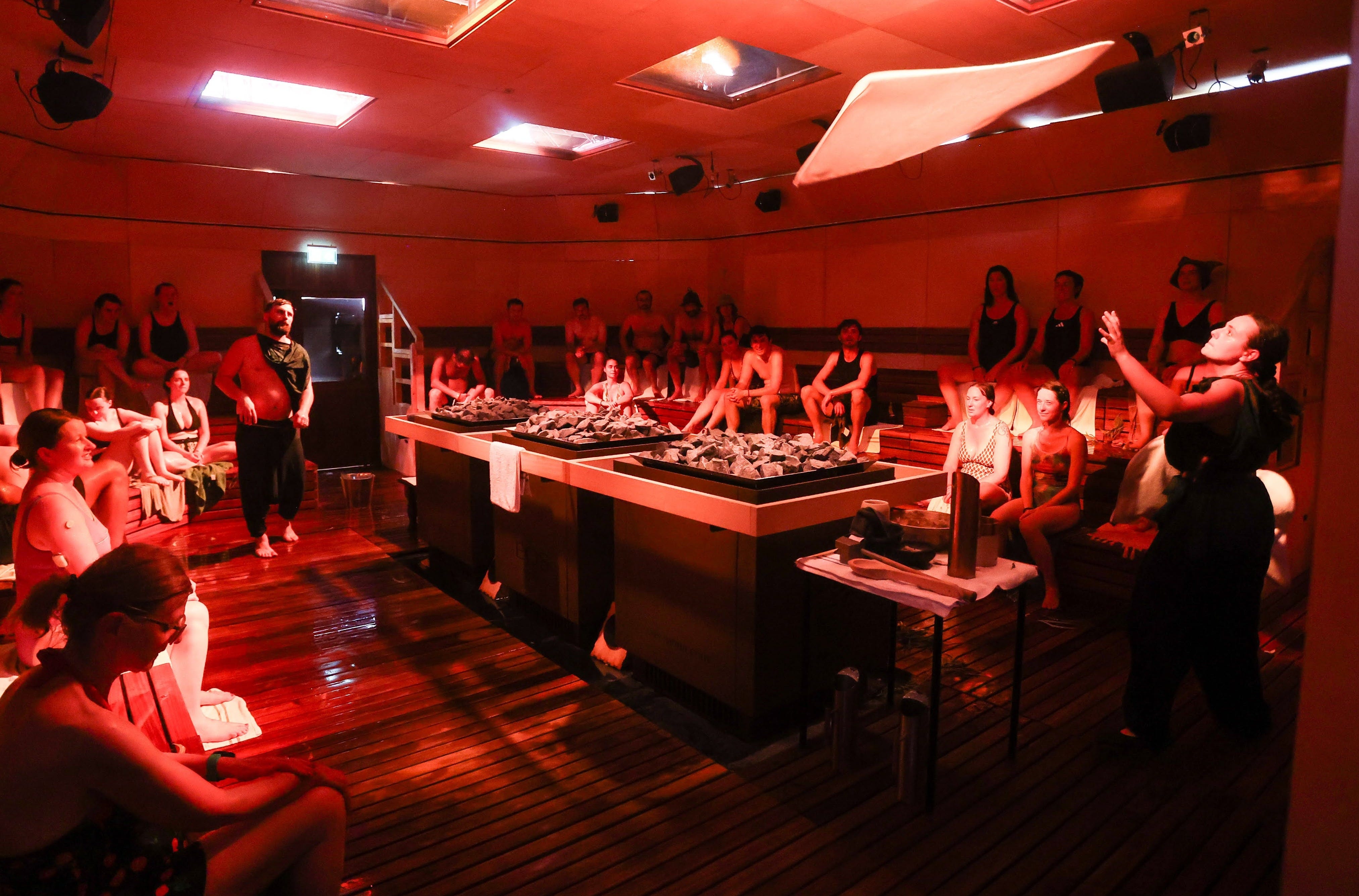
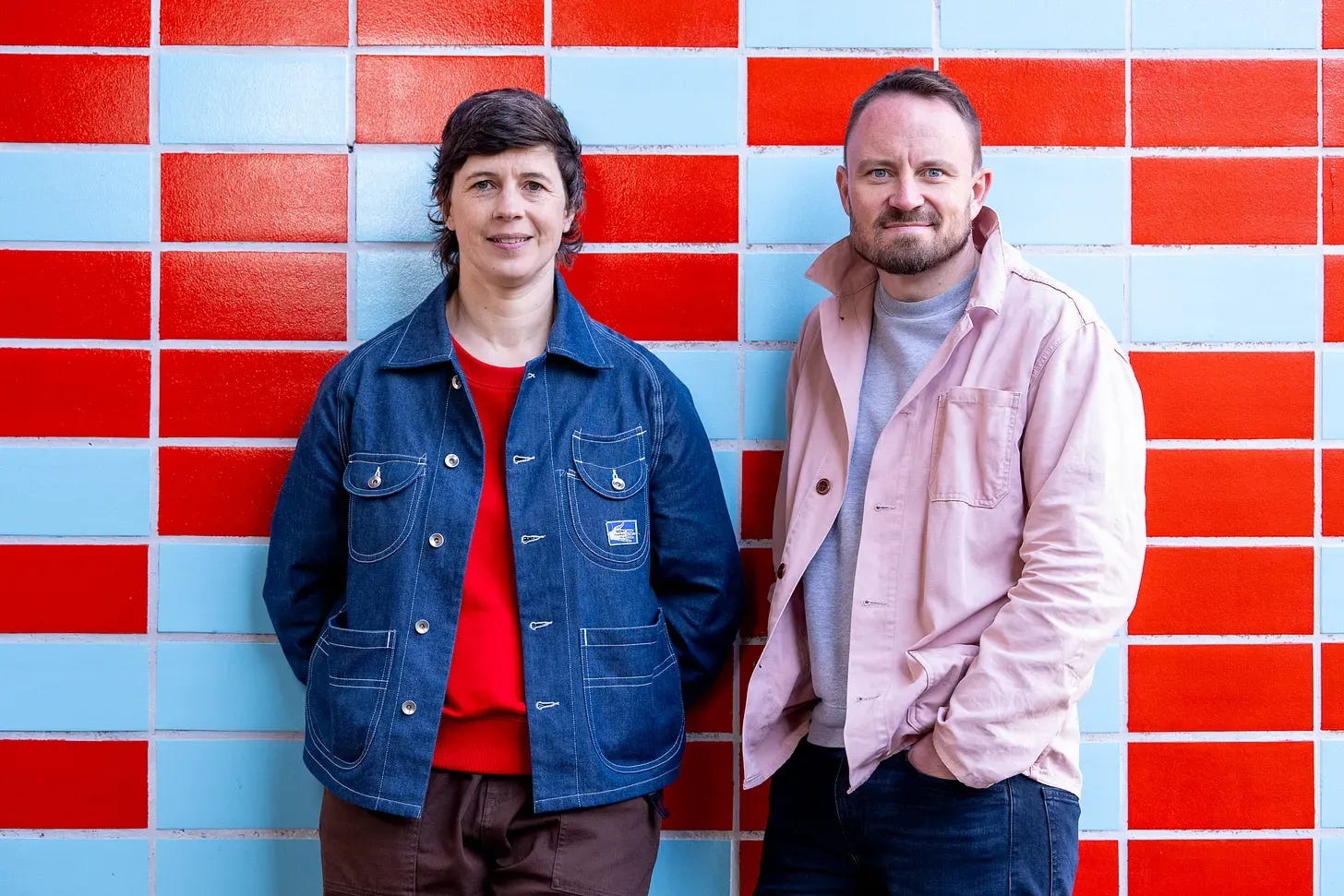
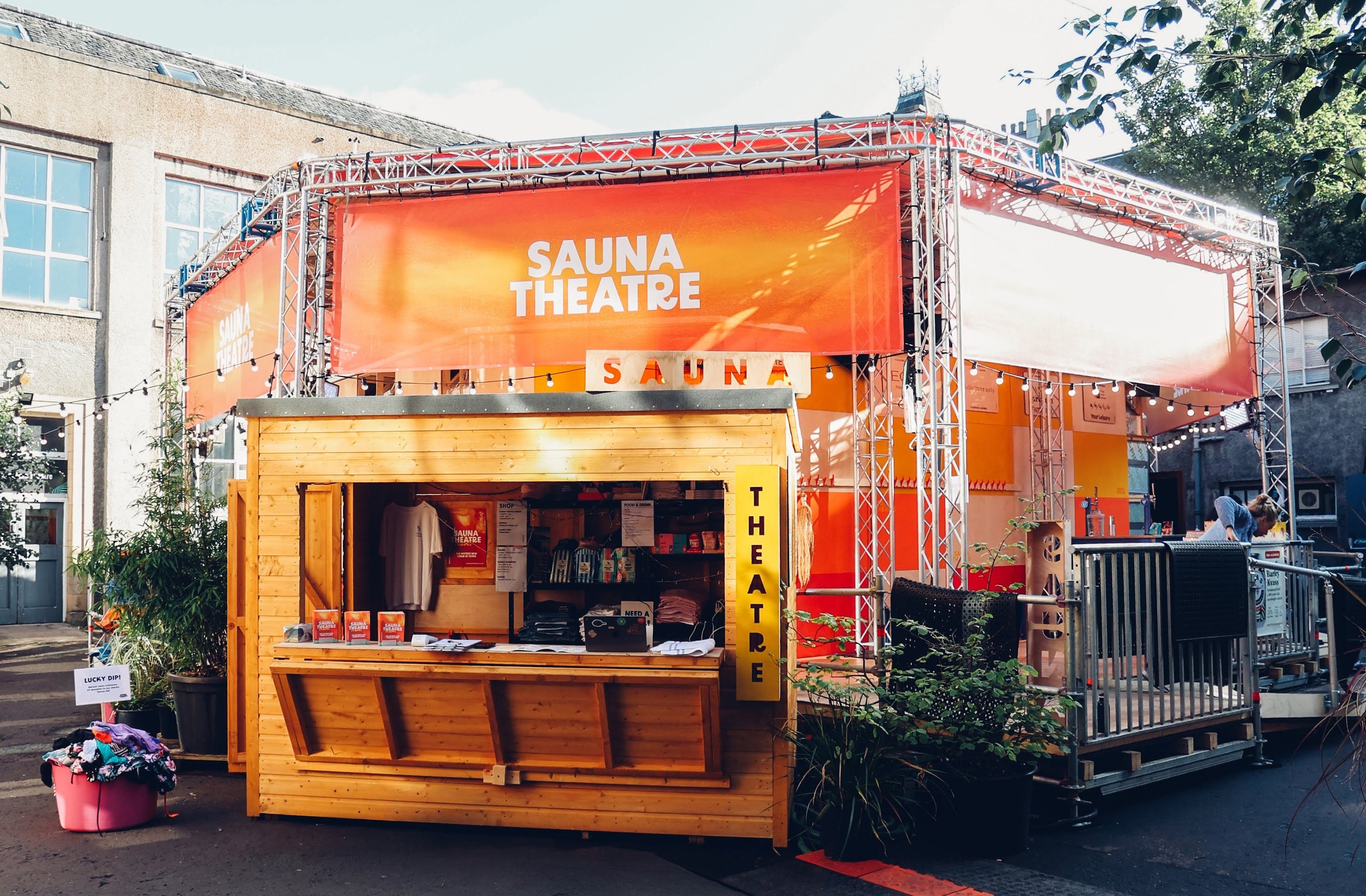
What happens when you mix the communal heat of a sauna with the magic of live performance? For over two decades, theatre director James Grieve and designer Lucy Osborne have brought shows to highly unconventional spaces. Now, they’re launching Sauna Theatre at the Edinburgh Fringe - the world’s largest performing arts festival – until August 31. Supported by Therme Manchester the program mixes international aufguss artists with Virginia Woolf, showcasing the creative potential of this emerging art form. Jane Withers talks to Lucy and James about using sauna’s superpowers to redefine how we experience storytelling and their ambitions for building an art and culture ecosystem around bathing.
Subscribe to receive our free regular posts, and upgrade to paid to support Sauna Aid our non profit partner
JANE WITHERS: Tell us about yourselves and how the idea of Sauna Theatre came about?
JAMES GRIEVE: I’m a theatre director and Lucy is a theatre designer; we have been making shows together for 20 years. We have a shared passion for inviting people who think theatre isn’t for them into the theatre space. And we’re passionate about sauna.
But we only recently started thinking about the similarities between sauna and theatre. They both evolved from sitting around a campfire telling a story. They both give people communal sensory experiences in a world that has become increasingly screen-orientated and disconnected. We’ve been talking about how these two worlds could merge for three years and now we’re opening Sauna Theatre in Edinburgh.
JANE: How exciting! What previous work have you drawn upon to develop Sauna Theatre?
JAMES: Much of our experience for Sauna Theatre came from our work on Roundabout, a plug-and-play theatre which flat-packed into a truck. It popped up in places where there was no existing theatre infrastructure. We took it to the Marsh Farm estate near Luton, notable for riots in the 90s, and stood outside for a week to tempt people to step inside. Sceptical teenagers would come in when we told them that they could play music really loudly or learn how to be a lighting designer. Word spread around the estate, and whole families came to watch new plays.
JANE: How do you expect sauna to change the audience’s relationship to theatre?
JAMES: Profoundly I think. I am more emotionally available in a sauna and I’m sure that’s to do with being somewhat vulnerable without clothes. It’s to do with heat and my body’s heightened sensory awareness. As theatre-makers, we’ve spent our whole careers thinking about how to tell stories and how to make an audience feel something. We’re excited about harnessing some of sauna’s superpowers - heat, humidity, aroma.
JANE: And what will it be like? Are you talking about aufguss or other forms of performance?
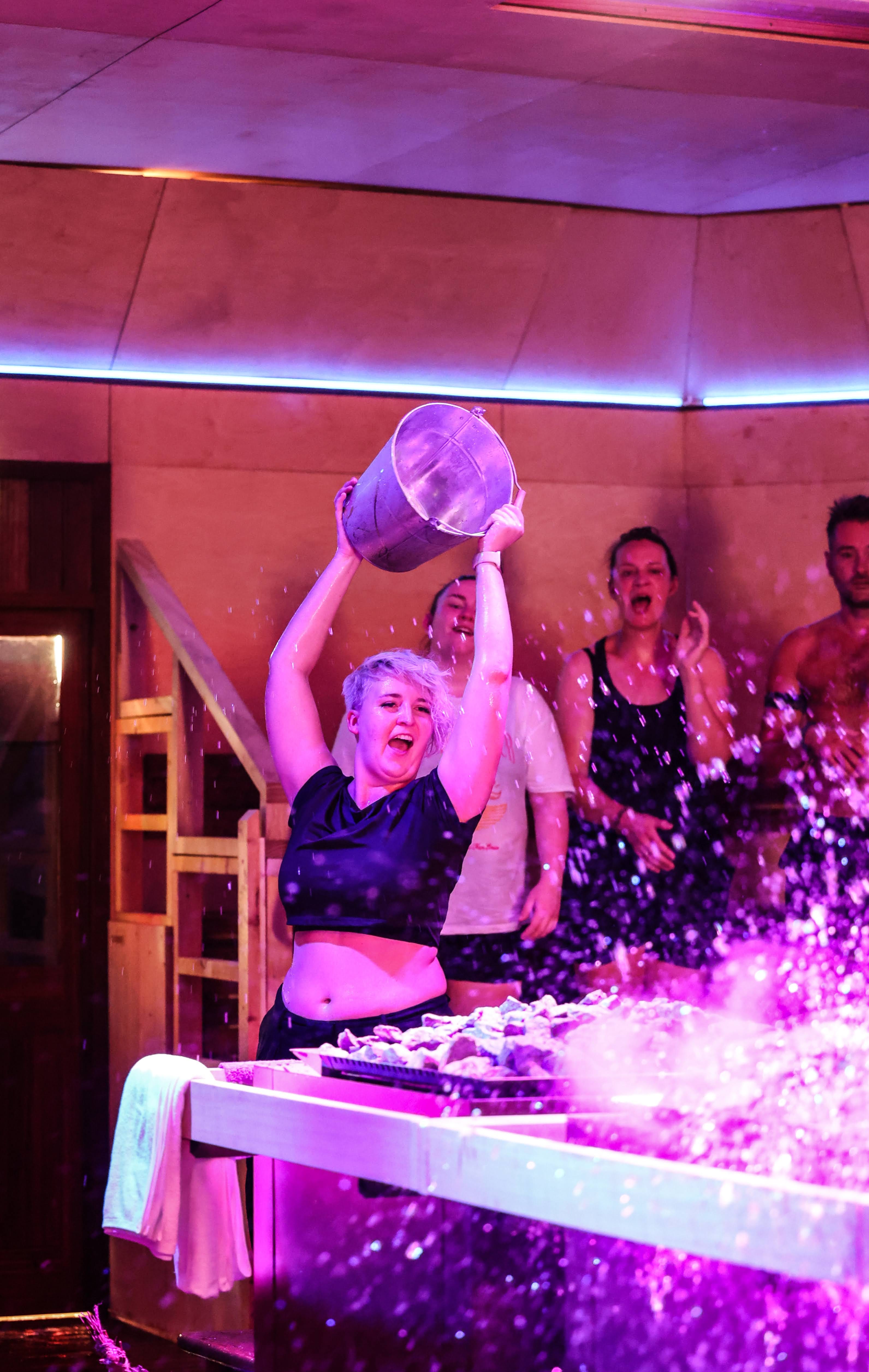
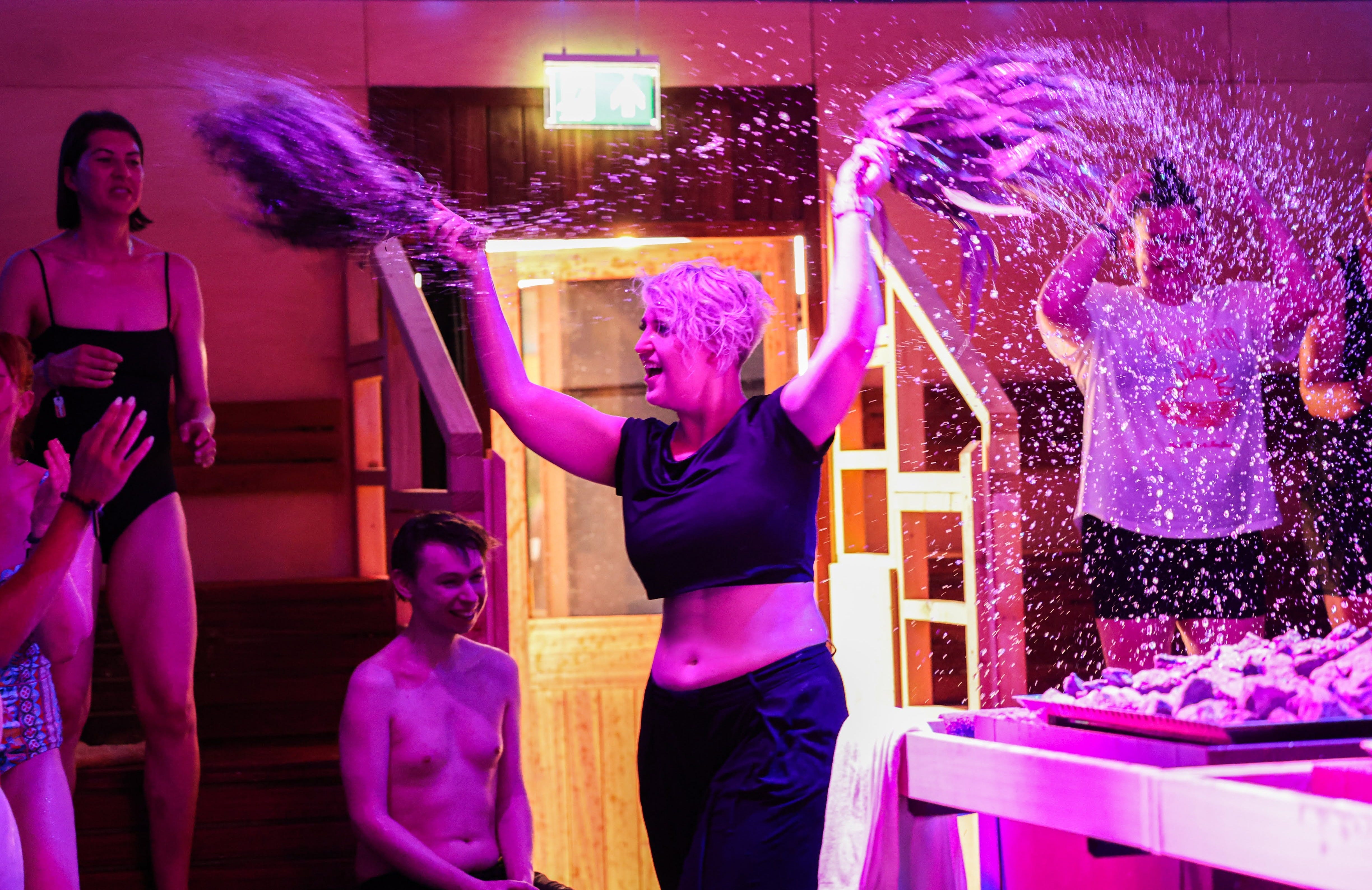
JAMES: Aufguss is how we’ve been introduced to theatricality in a sauna space and we have seen a lot of show aufguss which is governed by rules and regulations. As theatre-makers, we are naturally rule breakers and enjoy subverting theatrical form. So what we are most excited about is bringing theatre artists together with sauna masters and finding new ways to create worlds.
“As theatre-makers, we think about how to tell stories and make an audience feel something. We’re excited about harnessing sauna’s superpowers - heat, humidity, aroma.”
James Grieve
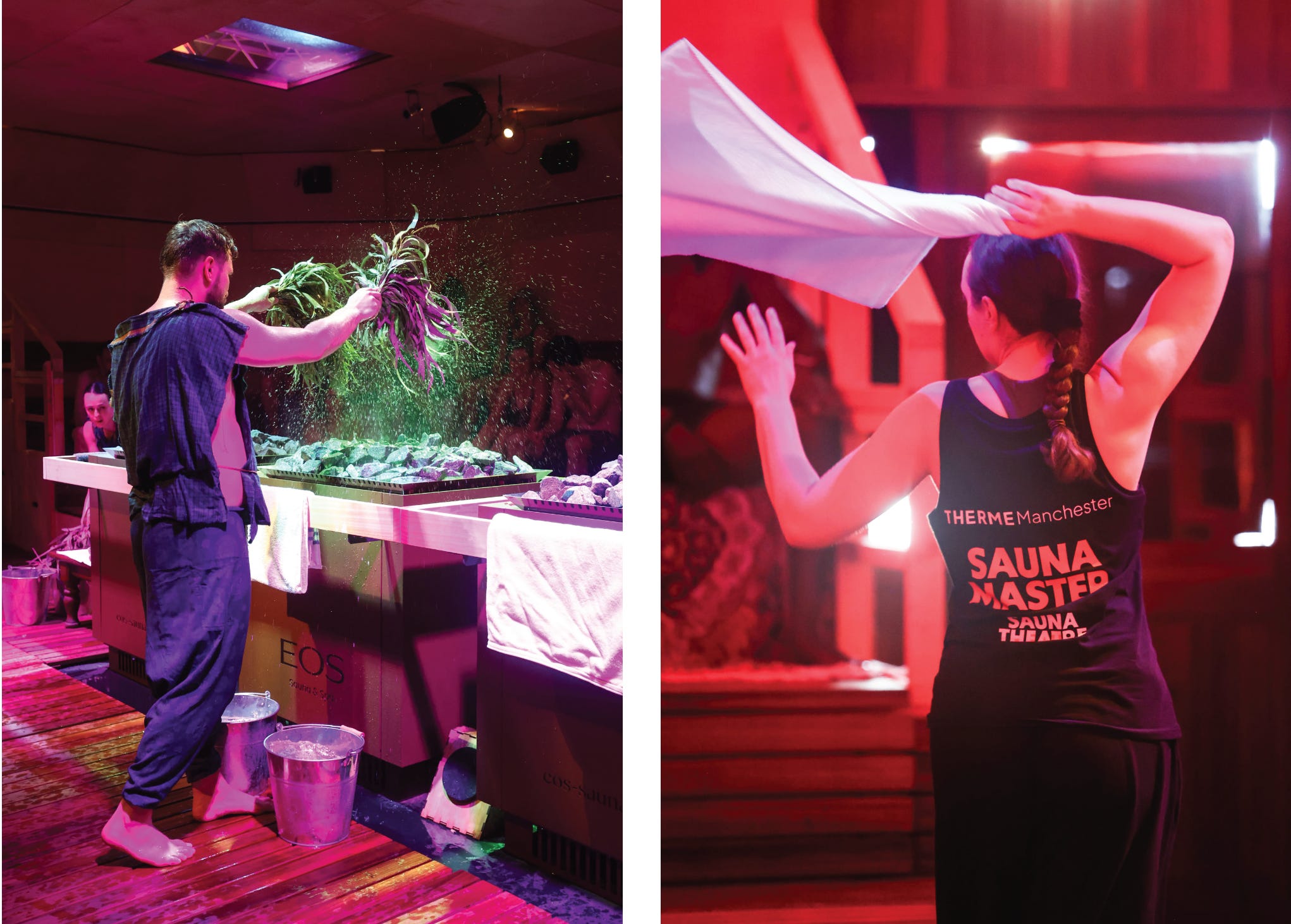
We are doing an adaptation of Virginia Woolf’s novel The Waves, chosen because the language of the book is so sensory. The text has been pre-recorded by actors and beautifully sound designed. The aufguss masters will interact with the language rather than the music. It will be freestyle aufguss in a way.
JANE: A kind of experimental aufguss?
JAMES: Exactly. We’ve got a literary salon with aufguss masters duetting with poets and non-fiction writers, it’s a big experiment.
JANE: There are plenty of precedents for mixing bathing and culture, and performance in particular - whether you think of musicians and jugglers in the Roman thermae or the play artist Rashid Johnson staged in the hot room of the Russian & Turkish Baths last year.
JAMES: We have found a thriving arts and culture scene in sauna, whether that is song and mythology in Finland or show aufguss in Poland and Slovakia. Our excitement is introducing new creatives and, in a few years’ time, it’s genuinely possible that we will have an incredibly rich art and culture ecosystem around bathing.
JANE: Tell me more about the design of Sauna Theatre and the thinking behind it?
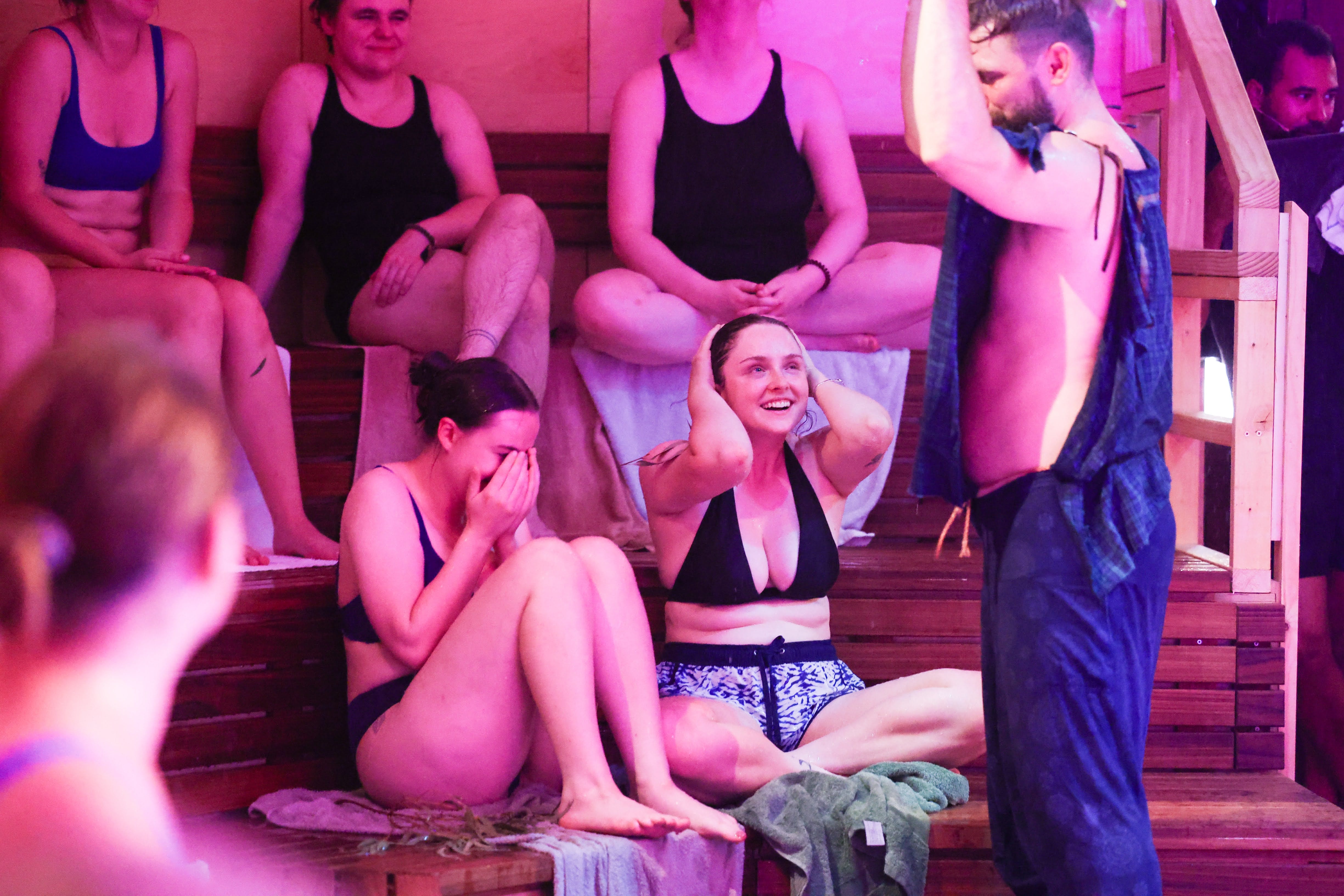
LUCY OSBORNE: We’ve always tried to create spaces that are intimate and focused. It’s as much about seeing the other audience members as how the experience is for you.
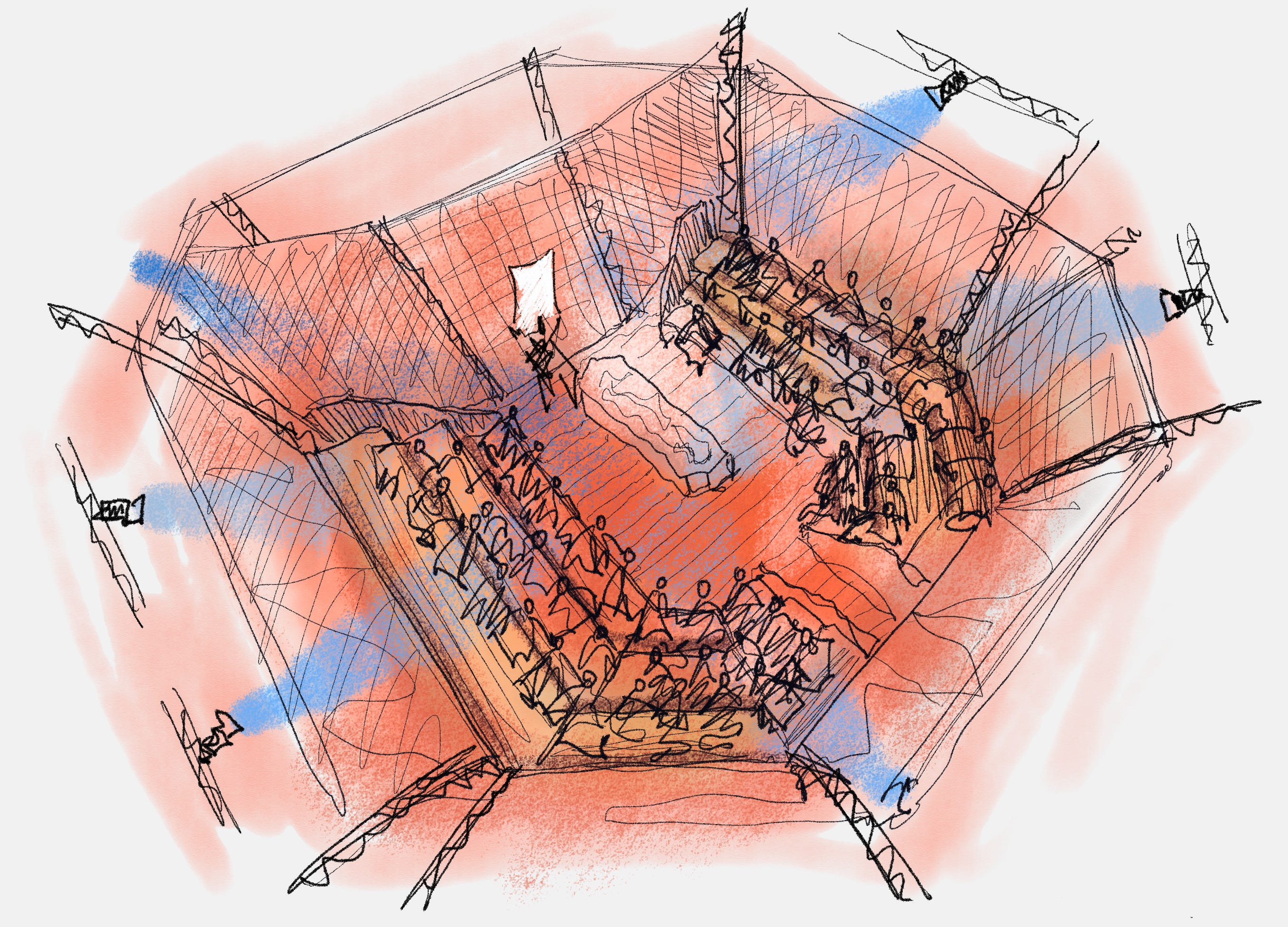
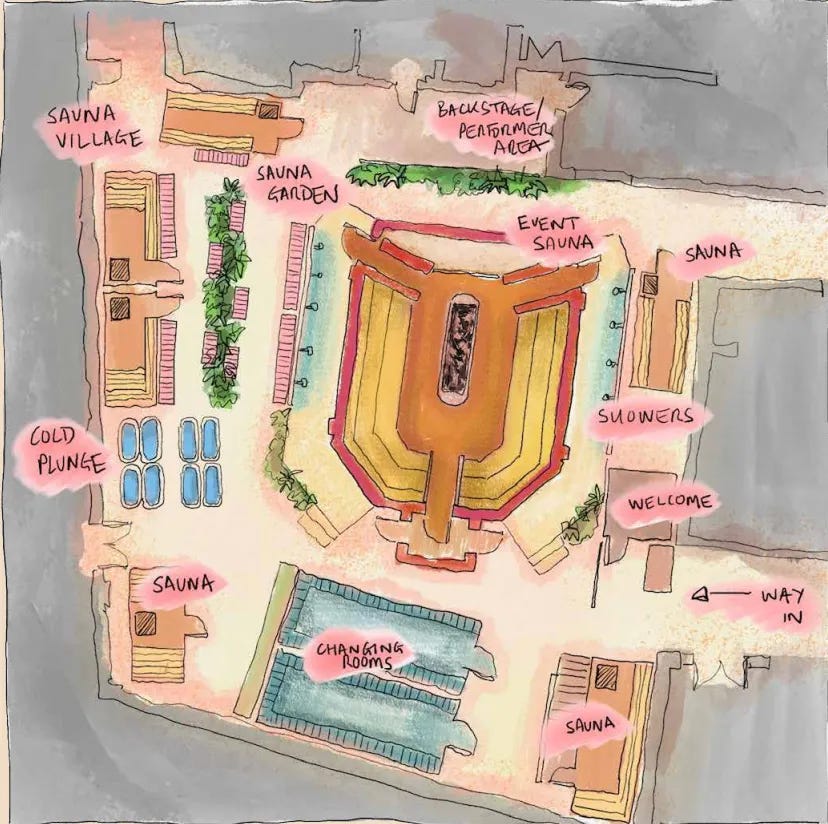
We’ve fine-tuned the design by talking to as many sauna masters as possible – the horseshoe shape is lovingly borrowed from Satama in Germany because they love to perform there. With a capacity of 80, we will be the UK’s biggest sauna when we open.
There are three big EOS stoves in the center with three tiers of amphitheatre seating. The lower level is low by European standards. We expect many of our audiences will be new to this and won’t necessarily want the intense heat levels at the top. There’s one way in and two ways out at the end so people can leave and cool down quickly. And musicians will be behind a big glass window so they and their instruments aren’t affected by the heat.
JANE: What are the biggest challenges – it must be quite a complex operation as not only is it a sauna theatre, it’s a portable one.
LUCY: We want people to feel like it’s a solid structure but it has to pack down into a truck. We’ve been looking for lightweight timber that can cope with the heavy demand. Sustainability has driven our material choices, ensuring we have no wastage, that everything is mindfully built. If something breaks we can easily replace a small component rather than rebuild a whole section of the wall.
JANE: After Edinburgh, what’s next?
JAMES: The hope is that from 2027 onwards, we return to Edinburgh every year and that the rest of the year we land around the country. The building’s modularity means it’s capable of going to a town square or a beach promenade. With a bit of work it could go to a field in the countryside.
JANE: In terms of the programming for Edinburgh, Bubble Schmeisis and Mysteries of the Picts stood out.
JAMES: Bubble Schmeisis premiered 10 years ago at Summerhall Arts Festival in Edinburgh (where Sauna Theatre is now). There aren’t many theatrical shows set in saunas or steam rooms so we decided, with creator Nick Cassenbaum, to remake a show that is loved all around the world but has never actually been performed in a bathing space. I think it’s going to be wonderful because the show is about the Canning Town Schvitz and the tradition of being inducted into the Schvitz as a young Jewish man by relatives and friends who have been going for years.
“I’m excited there is an emerging bathing culture in the UK which feels a bit up for grabs. I would love for Sauna Theatre to be a small part of moving the culture forward.”
James Grieve
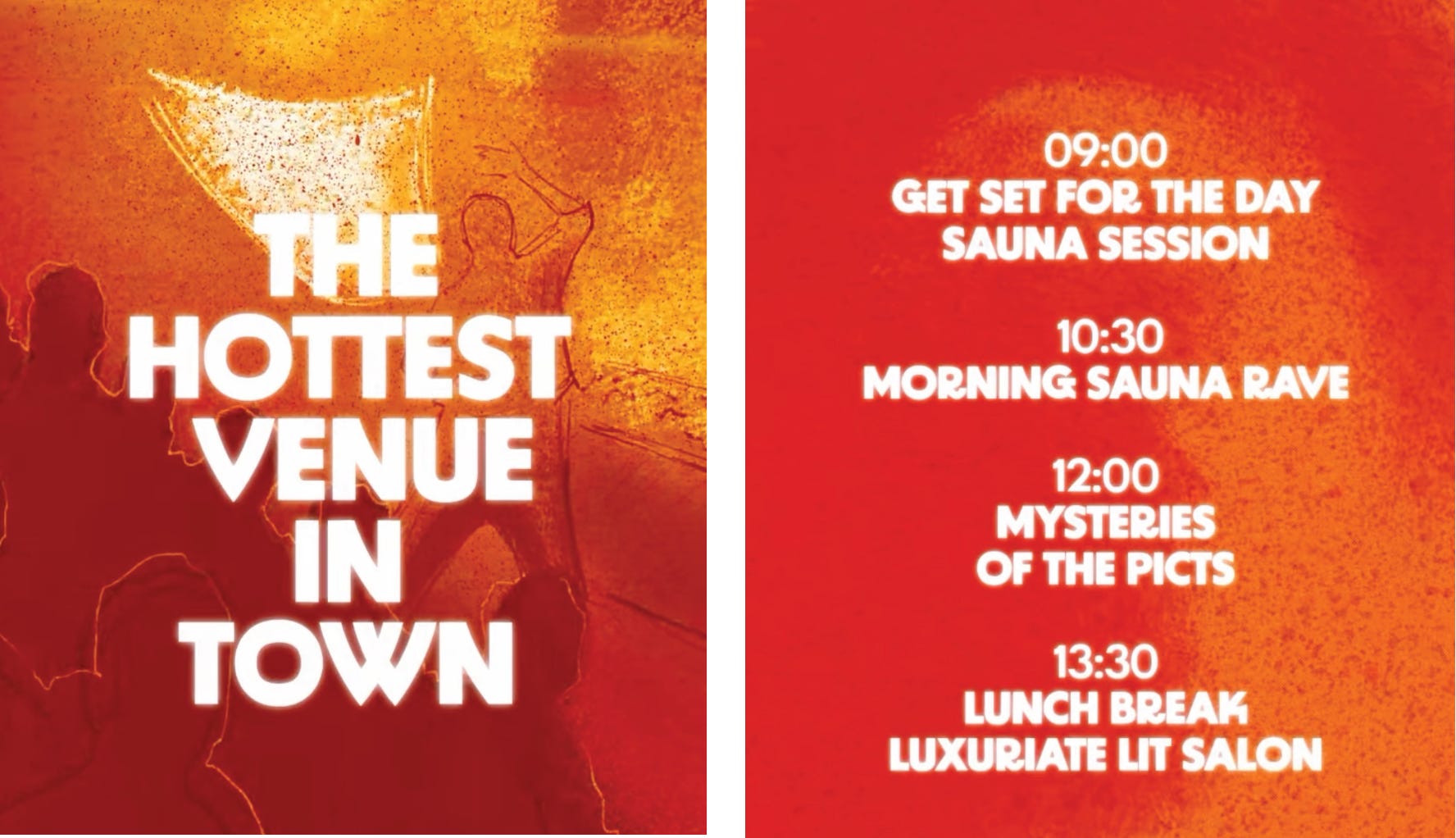
With Mysteries of the Picts we wanted to foreground rituals conducted by UK sauna masters, and to acknowledge the indigenous history of sweat bathing and sweathouses on these isles. There is no historical evidence that the Picts (tribes who lived in Northern Scotland from 300-900 AD calld Picti or “painted people” by the Romans) used sweathouses but we are building a speculative storytelling show that asks: what if these rituals have evolved through millennia? The Picts are mysterious and left so little behind, but what we do know is they were artists. By conducting sauna rituals together we’re doing something that has indigenous roots and is not just imported. It’s building that origin story.
JANE: I think that sounds great. Who will be performing in it?
JAMES: We’ll have two actors and two sauna masters so it’s a mix of more traditional theatrical form and ritual form.
JANE: And lastly, what does culture of bathing mean to you?
JAMES: There are defined cultures of bathing in certain parts of the world. I’m excited that there is currently an emerging culture in the UK which feels a bit up for grabs. I would love for Sauna Theatre to be a small part of moving the culture forward, to encourage more people to try it.
JANE: I agree, it’s how we create a contemporary bathing culture but one with the richness of the past.
LUCY: For me, culture is a fundamental pillar in life, in the same way as food, sleep and exercise are. Bathing culture is also essential to a healthy, broad life and it’s about encouraging people to have that regularity and relationship over time. Culture is about something that you can’t imagine living without.
Sauna Theatre is at Summerhall Arts, Edinburgh Festival Fringe, August 6-31, 2026. Directed by James Grieve, and designed by Lucy Osborne, Studio Three Sixty. In partnership with Therme Manchester.
Therme is continuing the show for the duration of Sauna Fest Month, running from October 5 until November 8 2026 in Bucharest and Germany. The program will feature countless performances by aufguss masters from around the world. Check out a recap of last year’s festival here.
Book here
IG: @saunatheatre
News, happenings and openings

Didi Gluck for Women’s Health asks “Bathhouse Culture is Coming For America. Are We Ready?
Stockholm-based artist duo Biggert & Bergström have designed a Crystal-shaped sauna rising from former industrial site in Sweden
Should N.Y. Bathhouses Be Allowed to Offer Space for Sex? Grace Ashford details the movement to bring back spaces in Bathhouses for the queer community in NYC
Plunge, swim, steam or bathe in these urban centres with these seven super swimming spots in Europe, Financial Times reports.
One last thing
Swimming on the subway?
We’d love to hear from you - please send a DM, or email hello@cultureofbathe-ing.com
This is depressing. Saunas were a rare spectacle free space. It’s sad to see them become another vehicle for constant entertainment.
Can’t wait to see this later in the month!